The human story
The raw material came from lived experience: family, work, relationships, memory, decisions, failures, unfinished questions, and people who remembered events differently.
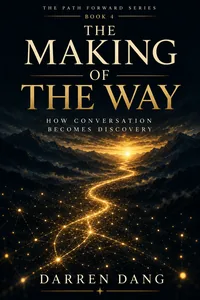
Current approved cover for The Making of The Way — How Conversation Becomes Discovery.
How Conversation Becomes Discovery
I had wanted to turn these experiences and lessons into books for years. What changed was not that AI suddenly had my story. It was that dialogue gave me a new way to work with the story I already carried.
Memories led to questions. Questions exposed patterns. Old stories looked different beside new ones. Corrections changed conclusions. Conversations with people who had been part of the original experiences widened the record again.
The Making of The Way opens that workshop. It tells the story of how the books—and eventually The Way—were made, while asking a larger question: what can become visible when a human and AI think together over time?
The experiences came first. As the conversations multiplied, so did the need to preserve sources, distinguish memory from interpretation, and keep corrections available. The structure grew because the work needed it.
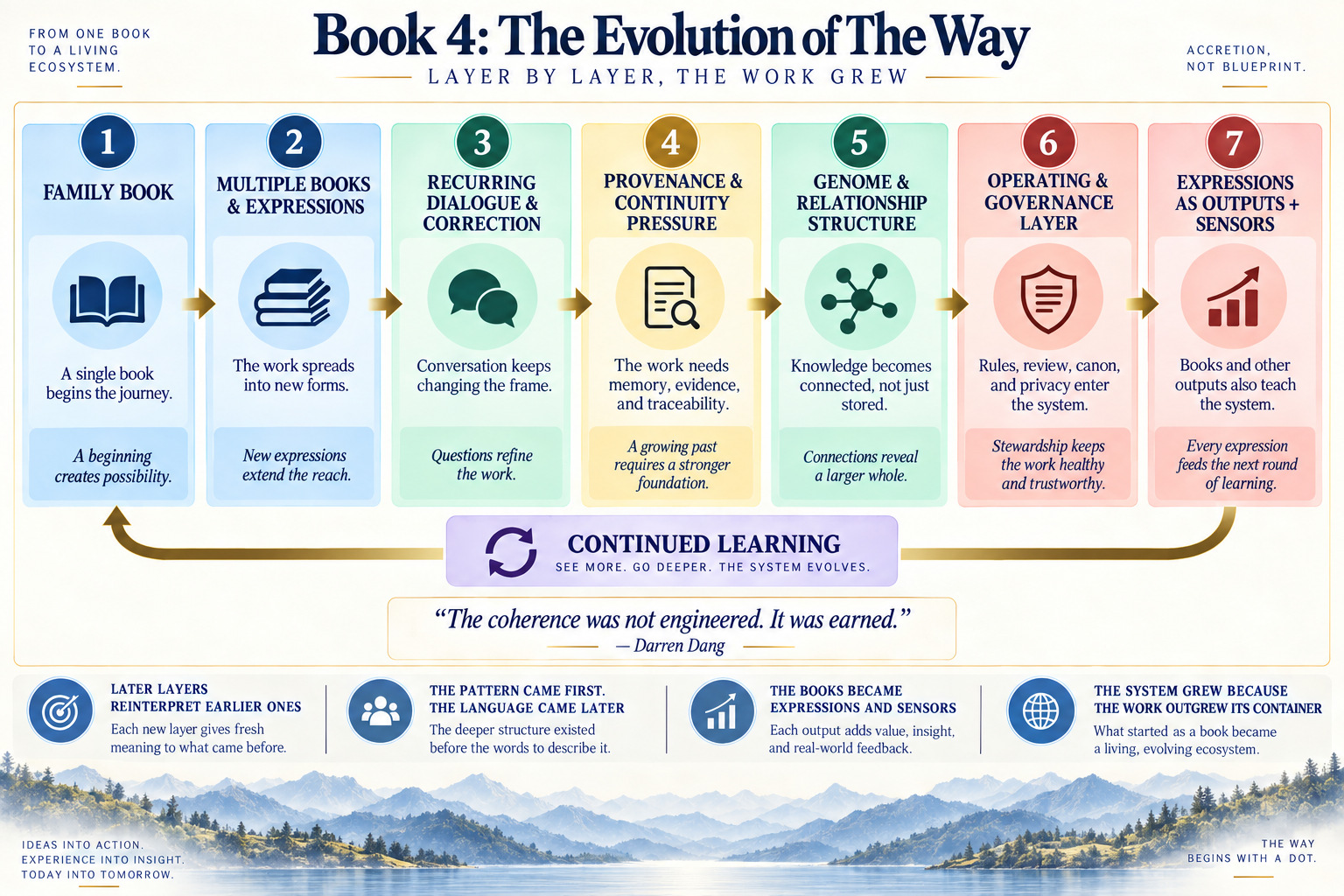
An original record, a transcript, and an interpretation do different jobs. A polished response still needs evidence and challenge. A useful conversation becomes durable knowledge when its sources, corrections, and human decisions remain available to the next person who uses it.
The book follows those distinctions through the actual making: where dialogue opened possibilities, where it went wrong, and why human judgment had to remain responsible for what was preserved and shared.
The raw material came from lived experience: family, work, relationships, memory, decisions, failures, unfinished questions, and people who remembered events differently.
AI became a thinking tool for asking, challenging, connecting, restructuring, and testing—not a substitute for having lived the life or deciding what it meant.
The process becomes trustworthy only when contradictions, changed memories, stronger evidence, and better interpretations are allowed to alter the work.
Some of the larger ideas were not present in finished form at the beginning. They became visible through the interaction itself.
Some conversations exchange what the participants already know. Others change what they are capable of seeing next.
This book follows the second kind. It preserves the questions, reframing, discarded structures, corrections, remembered details, disagreements, and moments of connection that changed the work along the way.
I use the term Generative Dialogue for disciplined conversation in which something new can emerge through the exchange—not because either participant began with the final answer, but because the dialogue changed the search space.
In the human–AI case documented here, AI can help widen that search space and test coherence. Human judgment remains responsible for purpose, truth, meaning, correction, privacy, authorship, canonization, publication, and final direction.
The tool can widen the conversation. The human still has to live, judge, choose, and care.